Special Session
Special Session on
Internet of AI Things (IoAT): Intelligent, Edge-Aware, and Autonomous Sensor Ecosystems -
IoAT
2026
18 - 20 July, 2026 - Porto, Portugal
Within the 13th International Conference on Sensors, IoT and Intelligent Networks - SENSORNETS 2026
CO-CHAIRS
|
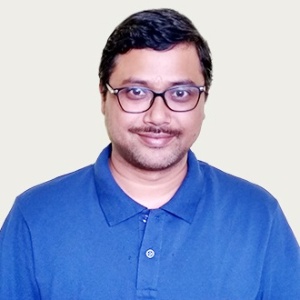
Partha Pratim Ray
Sikkim University
India
|
|
|
|
Brief Bio
Partha Pratim Ray is an Assistant Professor (Stage II) in the Department of Computer Applications at Sikkim University, India, with over 13 years of academic and research experience. He has established himself as a leading researcher in the domains of Internet of Things (IoT), Edge Computing, Pervasive Biomedical Informatics, and Generative AI. He has been recognized among the world’s top 2% scientists by Stanford University. Mr. Ray has an extensive publication record, including over 160 journal articles, conference papers, books, and book chapters, along with multiple national patent filings. His research contributions focus on integrating intelligent computing paradigms with resource-constrained environments, enabling scalable and privacy-aware real-world systems. A key contribution of his work is the conceptualization of the Internet of AI Things (IoAT), which extends traditional IoT by embedding localized AI and large language models into edge devices for real-time autonomous decision-making. His recent work includes deploying quantized LLMs on edge platforms such as Raspberry Pi and developing frameworks for energy-efficient AI inference.
|

|
Shuai Li
University of Oulu
Finland
|
|
|
|
Brief Bio
Dr. Shuai (Steven) Li is currently a Full Professor with Faculty of Information Technology and Electrical Engineering (ITEE), University of Oulu and also an Adjunct Professor with VTT-Technology Research Center of Finland. Steven's main research interests are nonlinear optimization and intelligent control with their applications to robotics. He has published over 200 SCI indexed journal papers (including more than 90 on IEEE transactions) on peer reviewed journals. Steven is available for supervising both master and PhD students. PhD graduates from his group are now working in leading universities in Hong Kong, India, China as professors. Steven is a Fellow of IET (Institution of Engineering and Technology), a Fellow of BCS (British Computer Society) and a Fellow of IMA (Institute of Mathematics and its Applications). In case you have interests for taking your further study under the supervision by Steven, please feel free to contact him at shuai.li@oulu.fi Please refer to his Google Scholar page to follow the latest research by Steven and his team https://scholar.google.com/citations?user=H8UOWqoAAAAJ&hl=en
|
SCOPE
The Internet of AI Things (IoAT) represents a paradigm shift beyond conventional IoT by embedding artificial intelligence directly into sensing, communication, and decision-making layers of distributed systems. This special session aims to explore the design, deployment, and evaluation of intelligent sensor ecosystems that integrate edge AI, localized large language models, and autonomous reasoning capabilities. Emphasis will be placed on resource-constrained environments, real-time inference, privacy-preserving architectures, and hybrid edge-cloud coordination. The session will bring together researchers and practitioners working on next-generation sensing infrastructures where cognition is natively embedded within devices. It seeks to address challenges in scalability, energy efficiency, trust, and adaptive intelligence, thereby shaping the future of pervasive AI-driven sensor networks.
TOPICS OF INTEREST
Topics of interest include, but are not limited to:
- Internet of AI Things (IoAT) Architectures and Frameworks
- Intelligent And Autonomous Sensor Ecosystems for IoAT
- AI-native IoT System Design
- Cognitive Sensing and Perception Systems in IoAT
- Edge AI For Real-time Decision-making
- Deployment of AI/ML Models On Resource-constrained Devices
- Tinyml and Lightweight Deep Learning Models
- On-device Intelligence and Embedded Analytics
- Quantized and Efficient LLMs For Edge Devices
- Localized AI Inference Using LLMs
- LLM-based Reasoning In IoT Systems
- Function Calling and Agentic Workflows in Edge Environments
- Edge-cloud Collaborative Architectures
- Distributed and Decentralized IoT Networks
- Low-latency and Energy-efficient Communication Protocols
- Software-defined Networking (SDN) for IoAT
- Real-time Data Analytics in Sensor Networks
- Multimodal Data Fusion
- Context-aware and Adaptive Computing
- Semantic Routing and Intelligent Data Pipelines
- Energy-aware AI Model Design
- Power-efficient Inference Mechanisms
- Thermal and Resource Optimization in Edge Devices
- Sustainable and Green AI For IoT
- Privacy-preserving AI (Federated Learning, Differential Privacy)
- Secure Edge Intelligence and Trusted Execution
- Blockchain-enabled IoT Systems
- Trust Management In Autonomous Sensor Networks
- Self-adaptive and Self-healing IoAT Systems
- Reinforcement Learning for IoAT Control
- Multi-agent Systems In IoAT Environments
- Autonomous Decision-making Frameworks
- Smart Healthcare and Biomedical IoAT Systems
- Smart Cities and Intelligent Infrastructure
- Industrial IoT (IIoT) and Industry 4.0
- Environmental Monitoring and Agriculture
- Intelligent Transportation and Mobility Systems
- Neuromorphic Computing For IoT
- AI-driven Digital Twins
- Human-AI Interaction In IoT Ecosystems
- Ethical AI and Responsible IoAT Deployment
IMPORTANT DATES
Paper Submission:
May 22, 2026
Authors Notification:
June 8, 2026
Camera Ready and Registration:
June 17, 2026
SPECIAL SESSION PROGRAM COMMITTEE
Available soon.
PAPER SUBMISSION
Prospective authors are invited to submit papers in any of the topics listed above.
Instructions for preparing the manuscript (in Word and Latex formats) are available at: Paper Templates
Please also check the Guidelines.
Papers must be submitted electronically via the web-based submission system using the appropriated button on this page.
PUBLICATIONS
After thorough reviewing by the special session program committee, all accepted papers will be published in a special section of the conference proceedings book - under an ISBN reference - and abstracted/indexed in DBLP, Google Scholar, EI-Compendex, INSPEC, Japanese Science and Technology Agency (JST), Norwegian Register for Scientific Journals and Series, Mathematical Reviews, SCImago, Scopus and zbMATH. CCIS volumes are also submitted for the inclusion in ISI Proceedings.